

Building Wealth for People and Communities
In honor of May Day, we’re highlighting this story about our Inclusive Economies Partner PowerSwitch Action from our recent six-year impact report: Journey to Justice.
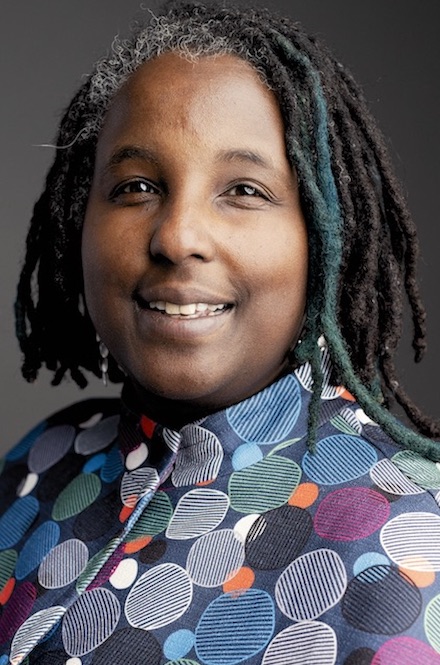 Born and raised in Harlem in the 70s and 80s, Lauren Jacobs, executive director of PowerSwitch Action (PowerSwitch), grew up in a neighborhood where Black and Latin kids played stickball together. A true city kid, she took the New York City subway, smushed up against all of humanity.
Today, as executive director of PowerSwitch Action, Lauren organizes for worker improvements and challenges some of the most powerful corporations in America. PowerSwitch’s tool of choice? The very solidarity Lauren witnessed as a child on the subway.
“All of us can work together and get a sense of our shared destiny, even when we don’t know each other,” says Lauren.
PowerSwitch is a national community of organizers, strategists, and leaders with a 24-hour view of working people’s lives and what they care about—livable wages, health insurance, affordable housing, and opportunities for their children. Its network of 21 grassroots affiliates aims to help regain control over our lives from corporations so we can have good jobs, thriving communities, and a healthy planet.
Lauren explains that a worker’s ability to organize is essential. It sows the seeds of democracy, asking difficult but necessary questions like, “How do we think about how those resources are getting deployed for the best benefit of everyone?”
This isn’t an accident—it’s policy.
“The cost of not doing anything is too great,” Jacobs argues, and her organization’s recent victories suggest PowerSwitch is onto something good.
She smiles broadly as she talks about how PowerSwitch’s affiliates went toe-to-toe with Amazon during its national request for proposals from local governments to host the corporation’s new “HQ2” headquarters in 2017. In New York City, PowerSwitch affiliate ALIGN helped forge a coalition that argued that Amazon hurts working-class neighborhoods and people of color because of the nearly $3 billion in tax breaks and subsidies offered by New York City and New York State–funds that otherwise would go to public resources such as schools and social services.
PowerSwitch and ALIGN’s efforts generated intense community opposition, forcing Amazon to abandon its New York City plans. In retrospect, many New Yorkers are breathing a sigh of relief because Amazon is falling far short of its job creation and economic development promises at its HQ2 headquarters in Northern Virginia, where it laid off hundreds of workers in 2023. That same year, New Yorkers celebrated ALIGN’s and Raise Up NY’s campaign to raise the State’s minimum wage. Over a million New Yorkers now earn an extra $670+ every year because the minimum wage was increased to $16 per hour in New York City, Westchester, and Long Island, and $15 per hour for the remainder of the State.
In May 2024, Surdna’s Inclusive Economies team awarded PowerSwitch a $900,000 grant, providing general operating support for three years, something grantee partners attest is essential to their work. “General operating support is critical because the ability to pivot and adjust depending on what is happening in the field is critical, and sometimes project grants can be very rigid,” Lauren explains.
Patrice R. Green, vice president of programs at Surdna, notes, “By calling for fair pay and safe jobs, naming unchecked corporate greed, and bringing alliances together to organize locally and nationally, PowerSwitch Action is making the U.S. economy more inclusive, prosperous, and equitable for everyone.”
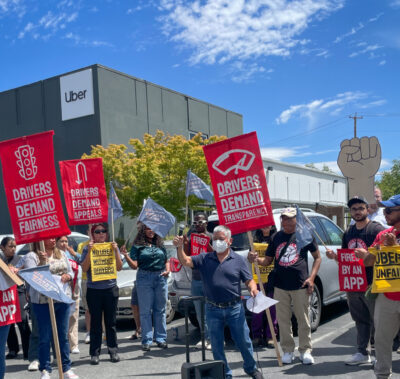
PowerSwitch and the National Employment Law Project partner to protect workers by challenging corporations. The “Bully’s Playbook” examines how app-based ride and delivery companies exploit drivers and riders for profit—and how workers fight for more for themselves, their families, and their communities.
PowerSwitch is also taking on abusive state preemption, which state legislatures use—often at the behest of corporate interests—to block local governments from adopting policies to meet urgent community needs, such as higher local minimum wages, housing affordability, and anti-discrimination protections. By exposing how corporations wield disproportionate influence on state and local policy and organizing communities to fight back, PowerSwitch and its affiliates are laying the groundwork to repeal these bans.
“What’s happening is things get preempted, and then nothing happens at the state level,” Lauren expounds. “Who’s benefiting from deregulation, or the lack of regulation on these things—corporations.”
Lauren underlines the importance of speaking with people on the ground and asking questions like, “Why is the minimum wage in Pennsylvania stuck at $7.25? How do we talk about this in a way that it just makes concrete sense to everyday folks? We can’t be deterred because, then, you’re accepting economic tyranny.”