

Honoring Marc de Venoge: Decades of Stewardship, History, and Heart
After 35 years with the Surdna Foundation, Marc de Venoge, vice president of finance and investing, will retire in June. He’ll hand off a finance operation built to last—a strong team, sound policies, and proven practices that ensure Surdna’s financial stewardship will continue without missing a beat. From the early days of Surdna’s one-room headquarters to the history-infused office on Madison Avenue today, Marc has been a steady presence for the foundation. His financial discipline, forward-thinking strategies, and enthusiasm for Andrus family memorabilia will be greatly missed!
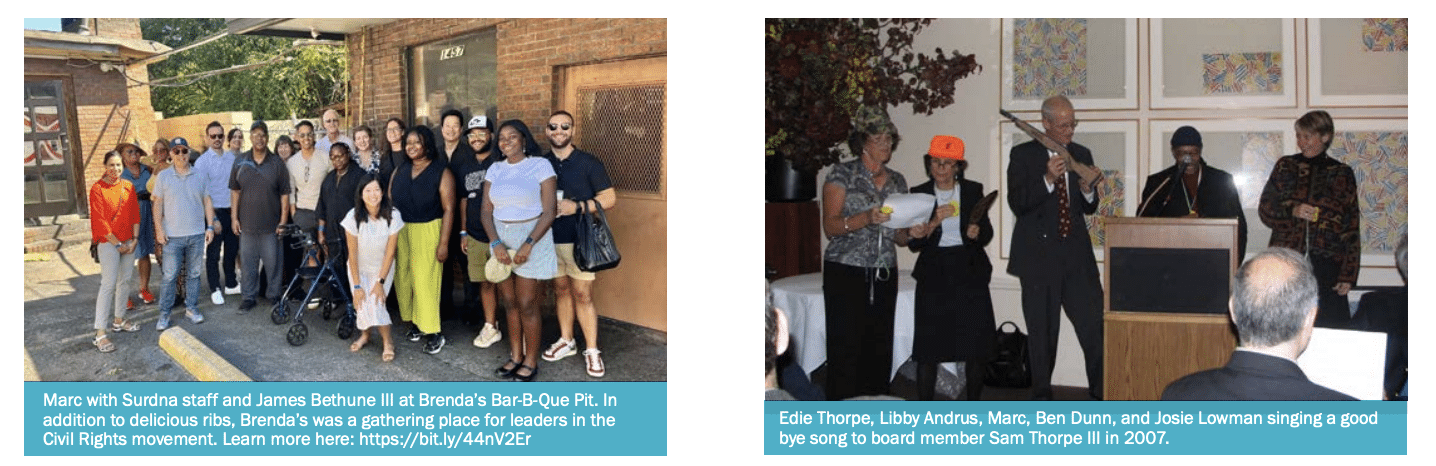
For Concinnity, the annual newsletter of the Andrus Family Philanthropies, we spoke with Marc about his reflections on 35 years of service. We are reposting the conversation below:
How did you first hear about Surdna, and what led you to work there?
Marc de Venoge: In 1984, I was working for the accounting firm BDO Seidman as a senior auditor for the pension plans of the JEA Memorials, specifically the Julia Dyckman Andrus Memorial and the John Emory Andrus Memorial. It was then that I made my first visit to Yonkers and to the former Julia Dyckman farm. This is where I saw JEA’s top hat in a glass cabinet at the farmhouse office and learned about Andrus philanthropies. In 1986, I was assigned to audit and prepare the tax return of the Surdna Foundation. Wading through a folder of receipts, a shoebox-like card file of Surdna’s grants typed onto index cards, and an investment transaction listing, I conducted my first audit of the foundation. In October 1990, Surdna’s first full-time staff member and executive director, Edward Skloot, hired me as the first CFO and the fourth hire after board member Frederick Moon encouraged me to apply.
How has Surdna evolved during your time there?
MDV: Before massive wealth poured into private foundations from technology and computer entrepreneurs in the 1980s, Surdna was the 25th largest foundation in the United States. In a book about private foundations, The Golden Donors, author Waldemar Nielsen described Surdna as an “underachiever, given the extraordinary generosity, vision, and boldness of the donor.” Those observations were a strong impetus for Surdna to start on its journey of professionalization. In my view, Surdna’s social justice movement also began in the 1990s, when Skloot and the Surdna board recognized the need and sought to support underserved communities in the South Bronx, New York. The board approved a $3 million grant strategy, labeled the Comprehensive Community Revitalization Program, which worked directly with seven community development corporations. This program provided comprehensive food services and distribution, as well as education, employment, and health services, for the first time through a coordinated grant process in collaboration with local residents. Of course, Surdna officially declared social justice at the heart of its grantmaking in 2008, but the seeds were planted long before that.
You are known as the resident family historian at Surdna. Tell us about your interest in Andrus family memorabilia.
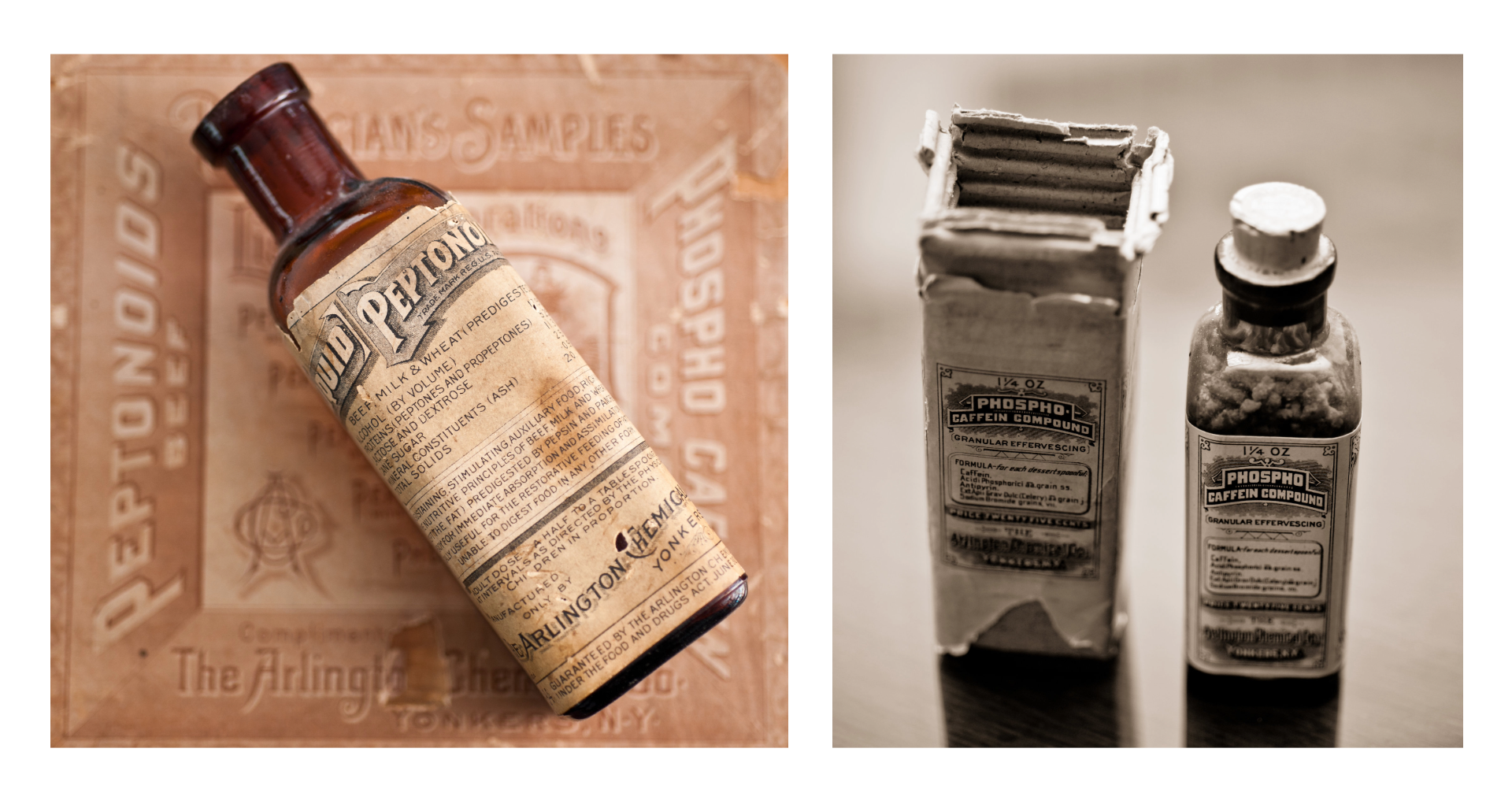
MDV: I love uncovering memorabilia, documents, and artifacts related to John E. Andrus and the foundation. Mr. Andrus’ story of business acumen, philanthropy, and his love of family, religion, and country resonated deeply with me. The history and artifacts I’ve discovered related to Peptonoids, an early pharmaceutical product developed by Andrus, are truly remarkable. With the help of eBay, I’ve secured items from all over the world, including Australia, northern Europe, and Alaska. I’ve even gone into antique stores and found his bottles there! While his liquid Peptonoids were the most prevalent, Andrus also developed many other products. The business model included efficient manufacturing, worldwide distribution, and focused advertising. Did you know he created phospho-caffeine compound tablets—essentially the 5-Hour Energy of his era?
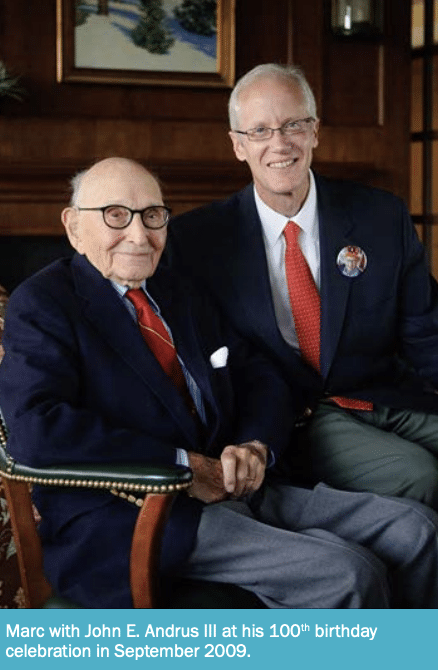 I’ve remained interested in the family’s rich history during my time at Surdna. Andrus became a millionaire by age 30 in the late 1860s. The desire to piece together his business model and story sparked my interest. I was invited to present this history to the family at the Concinnity reunion in 2023, and I really enjoyed that. It was certainly unexpected, but I was so honored when Cameron Griffith named me an honorary Andrus cousin. A favorite memory is when John Emory Andrus III invited me to his 100th birthday party in Minnesota. I was thrilled to be one of only two non-family members at the party. John even sat me at his table! It was such an honor, and I worked hard daily to earn and maintain that honor.
What accomplishments are you most proud of?
MDV: I am most proud of the 35-year above-benchmark endowment performance, including rebalancing the portfolio during the 2009 financial crisis, when the endowment’s value dropped by over 40 percent. This meant that Surdna honored its grant commitments and did not reduce staffing. The most feel-good accomplishment was uncovering memorabilia, documents, and artifacts that told the financial story of Peptonoids and sharing that amazing story with General Partners to gain allocations to high-performing private equity and venture capital managers.
Any plans for your retirement?
MDV: I am blessed with a wonderful wife, four children, three sons-in-law, and four grandchildren (so far). I’m fortunate that they all live close by, and I’m sure they will become an even bigger part of my daily life. I joined the Andrus on Hudson board in 2022, and I look forward to my continued service there. And I’ve also been volunteering every Sunday afternoon at the largest no-kill animal shelter in the United States, the North Shore Animal League. I find it very rewarding, so I expect my time there will increase. As a bit of a joke, I know that Surdna hopes I come back as a volunteer “docent” in my retirement, describing the artifacts arranged at the Surdna office. I may have only scratched the surface of what could be uncovered in places like university libraries or even from government archives.