

No More Kids in Prison: The Fight for Justice
A network of grassroots organizations is fighting for a world without youth prisons.
For Surdna’s 2025–2026 Living in the Future Impact Report, we partnered with Next City, whose journalists covered the work of eight of our many extraordinary grantee partners and investees. Chosen from hundreds of impactful efforts this year, these stories show that despite the recent backlash against racial progress, our partners are not waiting for a just and sustainable future; they’re building it now.
No More Kids in Prison: The Fight for Justice
By: Ryan Moser | Next City
Before her childhood home in West Haven, Connecticut, was lost in a fire, Iliana Pujols was a typical nine-year-old, playing soccer in the neighborhood and practicing cheer with friends at school. Life wasn’t perfect in the single-parent home, but it was filled with love.
“It’s hard for a young child to understand why they are living in a shelter or sleeping on someone’s couch,” says Pujols, now 28. “Life was hard for us after our home burnt down. And my mom tried, but she was dealing with her own systemic challenges, like the rest of my family circle.”
She lived with housing insecurity and remembers becoming combative and quietly restless at school. An altercation at a Subway led to her first arrest, and she was charged with assault. She was 11.
It was the catalyst for a seven-year journey with the probation department that she says eventually blurred the line between accountability and harassment. Pujols’ mother would have to frequently drive her to the probation office and appear in juvenile court.
“If I got locked up, my mom wouldn’t have anyone to watch my brothers while she was at work, so we had to really put on a show, crying and sobbing, until the judge would give me another break,” Pujols says. “I experienced the punitive youth justice system for years. I just never went into custody.”
In 2000, the United States had more juveniles in detention centers and adult prisons than the city of Green Bay, Wisconsin, had people. The number of kids incarcerated spiked at around 120,000. But thanks to grassroots organizing, much of it led by system-impacted youth themselves like Pujols, that number has fallen dramatically to 32,000, according to the Sentencing Project.
At school as a sophomore, despite being on the honor roll and her near-perfect attendance, Pujols was expelled by the administration for fighting, leaving the 16-year-old directionless until — while attending an alternative school to earn her diploma — she was introduced to someone who gave her a job at the Connecticut Justice Alliance, part of a network of groups fighting to end youth incarceration.
A standout from the start, Pujols co-founded the Justice Advisors, a youth-adult partnership built for promising leaders with firsthand experience of the legal system. Over seven years, she recruited and trained young people. And she helped shape what the organization asked of the state.
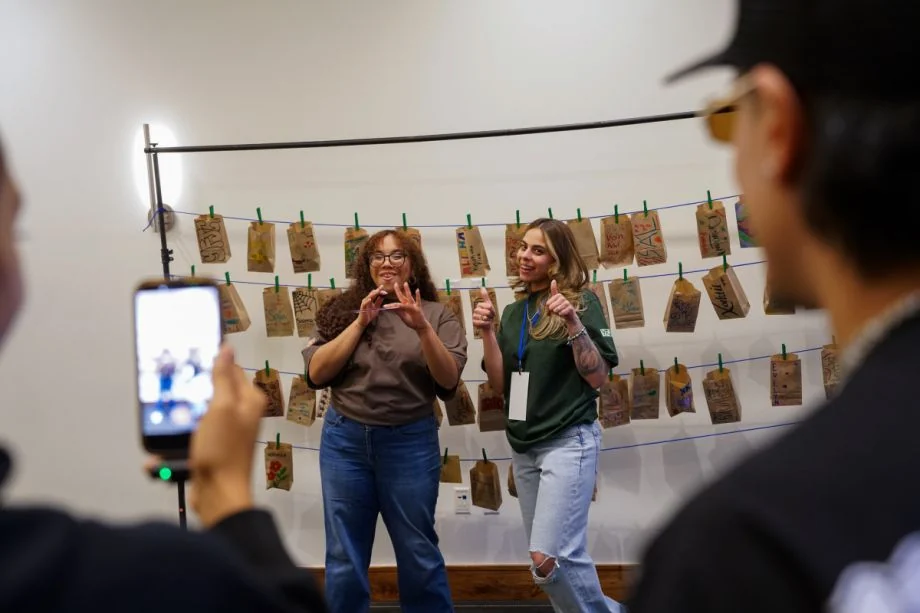
In 2024, Pujols took the opportunity to work nationally. She became Director of Youth Organizing and Leadership at the Youth First Justice Collaborative (YFJCo), where her job is to build the organizing capacity of youth organizers across a network of state partners and cement the relationships necessary to one day abolish youth prisons.
Connecticut Justice Alliance was a grantee of YFJCo, says Pujols, so it was a natural upward move to support people on a larger scale.
YFJCo and its partners across the country are dramatically reducing the rate of incarcerated youth. Still, even as youth incarceration has dropped by 74%, the Sentencing Project notes racial disparity remains. Black youth are more than five times as likely as white kids to be locked up – a disproportionate number by any measure. Partners in the network are working where the need is greatest.
One of those advocates is Antonio Travis, the Leadership Development Manager for Families and Friends of Louisiana’s Incarcerated Children (FFLIC). Travis grew up in the poverty-stricken wards of New Orleans, struggling to find himself and survive at the same time.
“I was definitely heading down the wrong path before I went to an alternative school at 17,” says Travis, now 33 and working with inner-city kids at-risk like he was years ago. “When I was a teen, I had these FFLIC guys coming into the hood and speaking my language. To see people who were from where I was from, who talked like me and walked like me, it directly affected me.”
Travis later joined FFLIC as a youth leader, then was hired as a program manager in his twenties. FFLIC celebrates its 25th anniversary this year, which Travis says wouldn’t have been possible without key partners like YFJCo.
“YFJCo’s support is crucial to our continued success, and having them as a benefactor allows FFLIC to network with other partner organizations across the nation,” Travis says.
One of the ways YFJCo connects organizers is through its Grassroots Assembly, in Denver this year. The Grassroots Assembly, held bi-annually, is a hub where organizers across the movement come together to network and strategize.
When FFLIC fought Constitutional Amendment 3 — a ballot measure Louisiana’s governor backed to make it easier to send kids into the adult criminal justice system — it drew in part on technical and financial support from YFJCo.
“We educated voters, put up billboards, took it to the streets and won,” says Travis. Voters rejected the amendment by roughly two to one, stopping a new pipeline to prison.
FFLIC is one of the groups YFJCo supports across 18 states, work made possible by $450,000 in general operating support from the Andrus Family Fund, a fund of the Surdna Foundation. The grant is meant to build YFJCo’s own capacity and to flow out to campaigns on the ground.
Surdna also funds many of YFJCo’s state partners, including Communities United for Restorative Youth Justice (California), RISE for Youth (Virginia), Legal Rights Center(Minnesota), Care, Not Control (Pennsylvania), Progeny (Kansas), Stand for Childrenand Southern Movement Committee (Tennessee), Southwest Organizing Project (New Mexico), The Final 5 Campaign (Illinois), Texas Civil Rights Project, and Connecticut Justice Alliance.
“We fund organizations and their partners who have, in essence, been leading the fight to close youth prisons,” says Mishi Faruqee, Director of the Andrus Family Fund. Previously, she was president at YFJCo. “This movement has now closed the doors on many, many youth prisons, and our goal is complete abolition of youth incarceration. We believe that restorative justice along with deep investment in communities is the answer.”
Research backs up the restorative approach. Across controlled evaluations in multiple cities, young people who sat down with the people they’d harmed were less likely to reoffend, and when they did, the crimes were less serious, according to the Sentencing Project.
“We need alternatives to what I call the youth punishment system,” says Faruqee. “We should promote education and employment for the youth, not incarceration.” She sees public-engagement programs like YFJCo’s “Block by Block fellowship” and the “No More Prisons campaign,” plus participatory grantmaking in which those affected decide how best to use the funding, as the way to get there. “The bottom line is that we want to end youth incarceration and family separation,” says Faruqee.
According to the Prison Policy Initiative’s report, “Youth Confinement: The Whole Pie 2025,” roughly 1,800 youth prisons and detention centers closed in the U.S. from 2000 to 2022, driven in large part by youth- and family-led organizing. And many more are slated for closure, says Faruqee.
Pujols is betting that organizations like YFJCo and its partners will put enough pressure on lawmakers to abolish youth prisons and “redirect funds into solutions that are proven to work and rooted in restorative practices, not punishment.”
“It’s what we should have done a long time ago,” says Pujols. “When will we all learn?”