

To Win Immigrant Rights, This Legal Group Fights in Court and Out of It
Three blocks from where the fight for birthright citizenship began, the Asian Law Caucus is still defending the principle — and everyone it affects.
For Surdna’s 2025–2026 Living in the Future Impact Report, we partnered with Next City, whose journalists covered the work of eight of our many extraordinary grantee partners and investees. Chosen from hundreds of impactful efforts this year, these stories show that despite the recent backlash against racial progress, our partners are not waiting for a just and sustainable future; they’re building it now.
To Win Immigrant Rights, This Legal Group Fights in Court and Out of It
By: Frances Nguyen | Next City
In 1873, Wong Kim Ark was born at 751 Sacramento Street in San Francisco’s Chinatown to two Chinese citizens living and working in the city. The question of whether he was a citizen by birth would end up defining who gets to be an American.
By the time Wong became an adult, the Chinese Exclusion Act of 1882 was signed into law, using race to determine who could enter the country. The Act banned Chinese laborers and prevented any Chinese immigrants already in the U.S. from becoming naturalized citizens. But Wong was born and raised on U.S. soil, a fact the federal government argued didn’t matter because his parents were foreign nationals. Wong took his case to the Supreme Court, which ruled in 1898 in his favor, citing the Citizenship Clause of the Fourteenth Amendment.
The landmark case established that being born on U.S. soil makes you an American citizen.
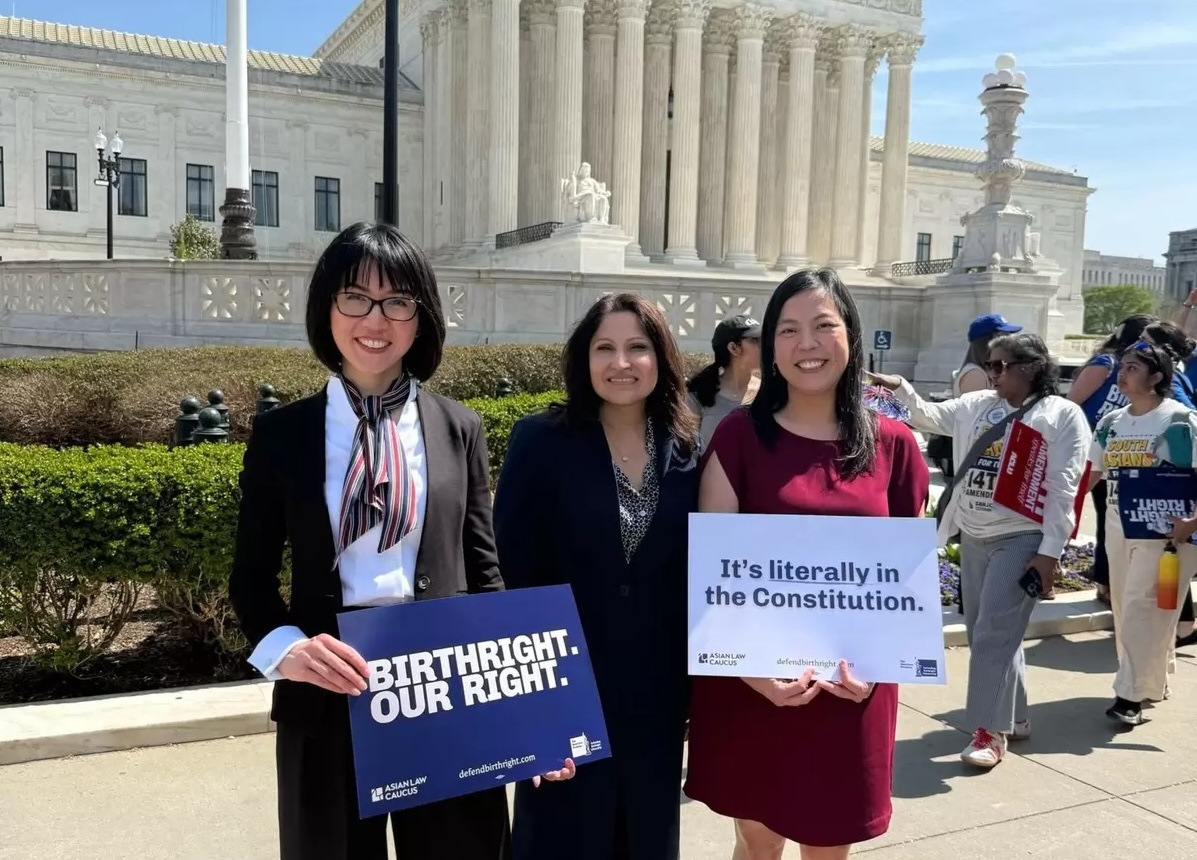
Over a century later, though, the argument hasn’t gone away; it’s changed who is fighting. The Supreme Court upheld the precedent set by United States v. Wong Kim Arkwhen striking down an attempt by President Donald Trump to deny birthright citizenship to children whose parents were in the country unlawfully or only temporarily. The challenge against Trump’s executive order, Trump v. Barbara, was brought by several civil rights organizations, with the Asian Law Caucus (ALC) as co-counsel. ALC is the nation’s first Asian American legal and civil rights organization, as well as the first legal aid organization focused on serving low-income Asian Americans.
Founded in 1972, ALC has its own storied history, taking on some of the nation’s most consequential civil rights cases. In 1983, ALC won a challenge overturning Fred Korematsu’s conviction for refusing to go into the government’s internment camps for Japanese Americans — nearly 40 years after the Supreme Court had ruled his incarceration was a wartime “military necessity.” The case later paved the way for the Civil Liberties Act of 1988, which granted reparations and a formal presidential apology to survivors of Japanese American internment during World War II.
As a trusted partner in the immigrant justice movement, Asian Law Caucus rises not only to the defense of Asian American and Pacific Islander communities but of all immigrant communities under threat.
ALC was a core member of the No Muslim Ban Ever coalition, founded in response to another Trump administration executive order, during the first term, banning people traveling to the U.S. from Muslim-majority and African countries.
The Trump administration is a regular opponent for ALC. For executive director Aarti Kohli, who has led the organization for a decade, fighting it has come to define her tenure.
“I kid you not — they offered me the job one week after Trump was elected in 2016,” says Kohli, speaking from ALC headquarters in San Francisco, a mere three blocks from where Wong Kim Ark was born.
Whether it’s expanding language access to voting materials, joining class action lawsuits, supporting legislation, or providing direct legal service to the Bay Area’s low-income residents and workers, ALC’s work starts from the ground up, Kohli explains.
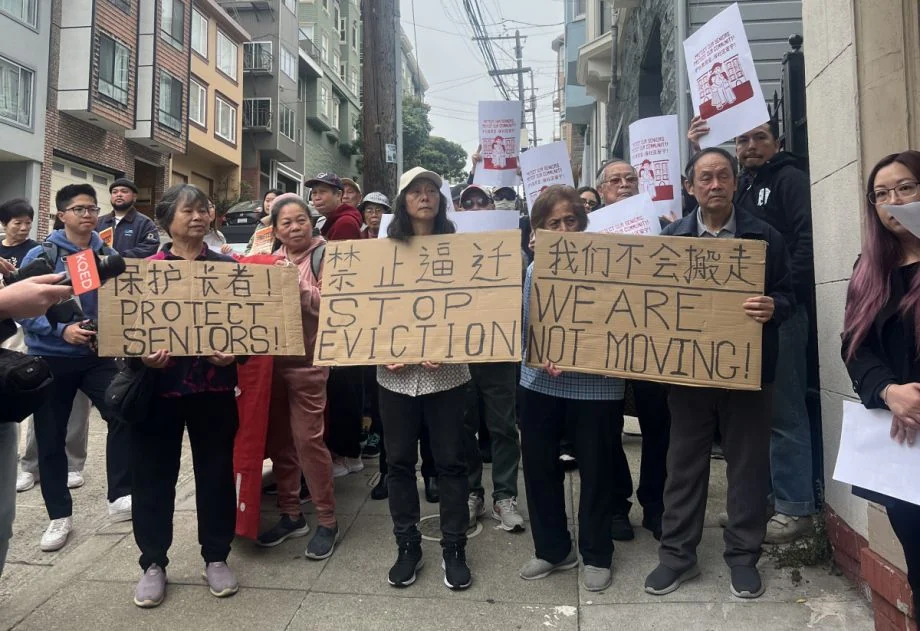
“While we start from learning about what’s happening to our communities, we’re really thinking about how these systems impact everyone,” says Kohli. “We’re not just trying to fix the situation. We’re trying to fix the system.”
Kohli defines ALC’s work as movement lawyering. Rather than keeping its lawyers apart from the community they serve, ALC embeds them in it, building community power from the grassroots up.
And there is perhaps no better community to help the organization connect the local to the national than San Francisco’s Bay Area, a historic national battleground for civil rights cases, like those with Wong and Korematsu.
“So many of the fights for Asian Americans’ rights — and even for equal protection in this country — originated in the Bay,” says Kohli. “We have a lot of cheerleaders here and people who want us to take our work to the next level.”
One of those cheerleaders is the South of Market Community Action Network (or SOMCAN), a fellow member of the San Francisco Anti-Displacement Coalition that has worked with the ALC on local immigrants’ and tenants’ rights for decades.
“We have a deep trust with the Asian Law Caucus,” says Angelica Cabande, SOMCAN’s executive director. “With their history in the movement, we always appreciate seeing them in strategic spaces that build more solidarity. They’re not just doing their own thing as lawyers but actually working with the community.”
Whether it’s a threat to one tenant or the entire community, says Cabande, “They’re somebody that we know we could rely on.”
Nationally, ALC is recognized among the multiracial coalition of civil rights groups challenging the federal government’s redefinition of who gets to be American, from attacks on birthright citizenship to exclusion of minority communities from voting.
“They have taken on some of the most vicious attacks on people and communities that we’ve seen in the rise of American authoritarianism,” says Don Chen, president of the Surdna Foundation, which provides general operating support to ALC. “I have a huge amount of admiration for just how willing they’ve been to throw themselves into the fire.”
The threats facing the communities ALC serves have always been relentless, and under an emboldened administration, they show no signs of abating.
This summer, Trump signed two more executive orders limiting birthright citizenship in an attempt to bypass the Supreme Court’s ruling, including disqualifying children born to anyone considered an “alien enemy” of the United States — which echoes the language that opened the door for mass incarceration of Japanese Americans.
“The administration has a bully pulpit, and the anti-immigrant rhetoric has reached a peak in this country. The lies and disinformation are so prevalent,” says Kohli. “It’s a very difficult moment.”
But Kohli also notes a change in the tide. “Americans see the harm, and public opinion is moving.” Which is why she’s been redirecting the organization’s strategy, pursuing legal work that shifts the narrative. “We can’t just win in the courtroom,” she says. “We have to win in the court of public opinion.”
That’s why ALC must be discerning about which fights it takes on, given its resources, capacity, and whether it will “help us tell an important story and bring our communities along,” says Kohli, and the organization’s supporters have faith it will make the choices that protect communities and help them build power long into the future.
“ALC has been fierce and fearless in protecting our nation’s founding ideals of liberty, equality, and justice for all,” says Chen. “When I think about the future we’re all trying to build, I think of them as the folks who are meeting the moment and improving the system so that no matter a person’s zip code, bank balance, or skin color, everyone has a fair shot at a good life.”