

Building the Climate Solutions the Market Won’t
A company that destroys “forever chemicals.” Another that halved the time it takes to put solar on a roof. These are some of the long bets where the Surdna Foundation has aimed its endowment’s investment power.
For Surdna’s 2025–2026 Living in the Future Impact Report, we partnered with Next City, whose journalists covered the work of eight of our many extraordinary grantee partners and investees. Chosen from hundreds of impactful efforts this year, these stories show that despite the recent backlash against racial progress, our partners are not waiting for a just and sustainable future; they’re building it now.
Building the Climate Solutions the Market Won’t
By: Angely Mercado | Next City
Adam Connaker is an investor by trade, and while the market knows how to move money, he says nobody’s paying to build many of the things society needs most. So his job is to turn the tools of investing on the gaps the market leaves behind.
As the Vice President of Investments for the Surdna Foundation, he puts the endowment’s investing power behind inventing solutions that advance the foundation’s broader mission, including saving our threatened environment. According to Connaker, both grantmaking and endowment investing have their place in ensuring environmental solutions get off the ground and grow. But the endowment is a larger pool of money operating with longer-term commitments needed to push ideas from concept to product.
“It brings a different scale, a different longevity. The endowment doesn’t change its trajectory as quickly, right?” Connaker said. “You’re signing up for 10- to 12-year partnerships with the managers of these funds.”
One of those is the Ecosystem Integrity Fund. It finds early-growth-stage companies working to solve big questions about how we live on this planet. One of those companies is Trashie, a textile recycling startup, and Connaker met the CEO while digging into what set the company apart from other recycling ventures.

“I’m a skeptic on the front end,” said Connaker, who prides himself on scrutinizing and understanding how new companies are meeting a need. “I was like ‘OK, another recycling company.’ But I learned that they’re breaking it down into so many usable parts. They’re not just putting it into a recycling bin, right? They’re actually sorting it into 200 recycling bins of higher and best-use purposes.”
Deciding which companies to choose for the portfolio, according to Geoffrey Eisenberg, a senior partner at EIF, isn’t based solely on an immediate market opportunity. There must be an environmental solution. Partners at the fund look at the many environmental issues facing our world today, then ask which “companies are coming up with innovations that solve this fundamental problem?”
Eisenberg calls the fund an opportunity to “hasten the transition” into a cleaner grid and a less polluted world. He’s especially excited by companies mitigating emissions from transportation and energy. Other early-stage ventures, like Zep Solar — an investment now successfully exited — improve access to the tools that lower emissions.
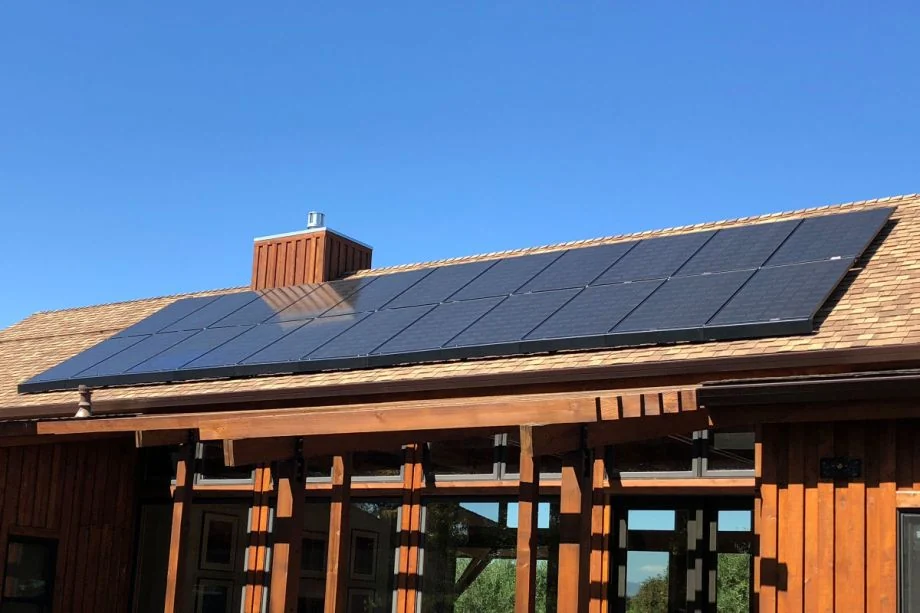
“In the case of Zep, we invested in a company that cut the amount of time to put solar on a rooftop in half and cut the cost by a quarter,” said Eisenberg. “Think about it in the grand scheme of things, that’s a big deal.”
For Sasha Brown, a senior partner at the EIF alongside Eisenberg, part of the job is finding companies that haven’t begun pitching themselves publicly. Brown draws on her background as an environmental engineer in conversations with experts as she decides where to invest.
“That sometimes means we’re talking to people in academia. We’re talking to people in interest groups and learning from them what groups are doing interesting research,” Brown explains. “We’re getting to know them before innovations may ever be in the market.”
Success for some startups can mean partnering with or even being acquired by larger enterprises that can scale up their impact. Auto Motive Power, an electric vehicle startup known as AMP, was acquired by Ford at the end of 2023 to help the automotive manufacturer expand its electric cars.
“The AMP team is basically designing Ford’s next-generation, cheap, electric pickup trucks and SUVs,” said Eisenberg.
Connaker’s voice lit up when listing the other unique examples that EIF will fund. Claros Technologies, for example, is a startup that destroys cancer-causing “forever chemicals.” He sees solutions that make the impossible possible as a sign that Surdna’s work and EIF’s efforts are supporting a better world.
“We get to really dream big,” he says. “It doesn’t have to be perfect. Let’s just imagine what we need, and let’s invest in it. In some cases, we’re 10 or 15 years away from any of those businesses touching all of our lives.”