

In Utica, Sipp Culture Builds a Future Artists Don’t Have to Leave Home to Find
How a cultural center is turning public spaces and artist support into a model for building stronger rural Southern communities.
For Surdna’s 2025–2026 Living in the Future Impact Report, we partnered with Next City, whose journalists covered the work of eight of our many extraordinary grantee partners and investees. Chosen from hundreds of impactful efforts this year, these stories show that despite the recent backlash against racial progress, our partners are not waiting for a just and sustainable future; they’re building it now.
In Utica, Sipp Culture Builds a Future Artists Don’t Have to Leave Home to Find
By: NaBeela Washington | Next City
For roughly two decades, a building at one of downtown Utica, Mississippi’s most visible intersections sat dark. Carlton Turner remembered it as a NAPA Auto Parts store. After the business closed, residents of the rural town southwest of Jackson passed by the building at the corner of Main and White Oak streets every day.
“You’ve driven by this dark spot, this spot that has been abandoned for 20-plus years,” says Turner. “Psychologically, I think it does something to hope.”
Today, the building is Sipp Culture’s Main Street Cultural Center. On Friday nights, residents come for fish fries, karaoke, and line dancing. Children make sticker books with an elder named Miss Jean. During the growing season, Saturday mornings bring breakfast and a farmers market featuring produce from Sipp Culture’s Community farm and other local growers. The space also hosts community meetings, birthday parties, quinceañeras, and health programming. Even when the building is empty, Turner notices something different.
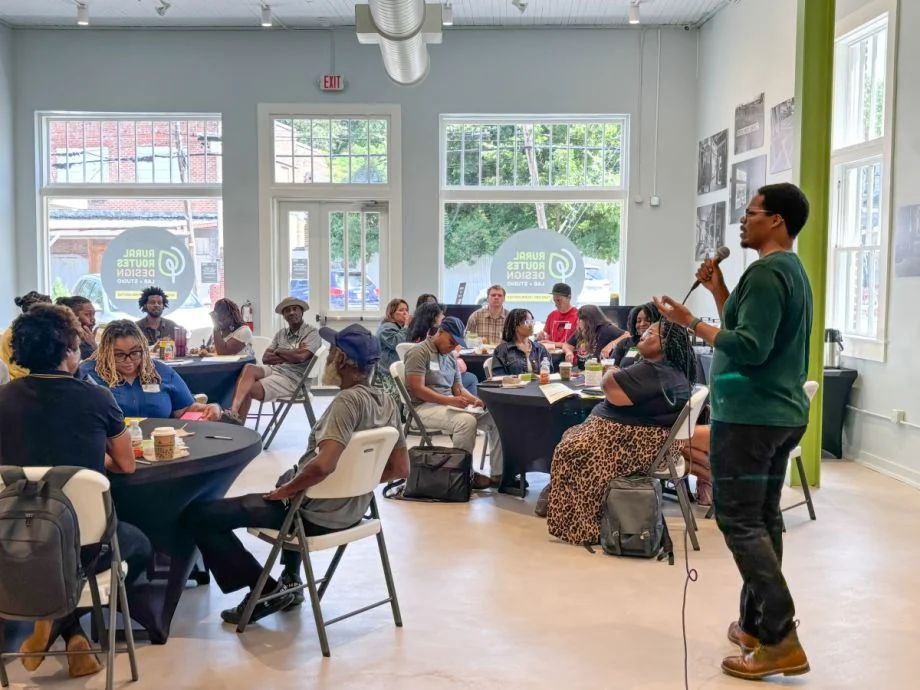
You can feel a “signal that there’s life in the building,” he said, and that Utica may be moving in a different direction.
For Turner, 51, Sipp Culture’s co-founder and co-director, Main Street has long served as a measure of the town’s health.
When he was growing up, residents could buy groceries, furniture, appliances and freshly butchered meat. Doctors and dentists had offices nearby. Two schools brought buses, parents, teachers and children downtown each weekday.
“Main Street really was the indicator of the vibrancy of the community,” says Turner.
Turner’s family has lived in Utica for eight generations. And despite the assumption that he left Mississippi and later returned, he never did. Instead, after spending years working with artists and cultural organizations around the country, he began redirecting more of that work toward home.
He saw Utica facing the same problems he encountered elsewhere—the erosion of institutions that held communities together, particularly in rural Southern towns built around agricultural and transportation economies that had changed or disappeared.
Turner describes what followed simply as “abandonment.”
Sipp Culture, formerly the Mississippi Center for Cultural Production, began operating in 2017. Turner and his wife and co-founder, Brandi Turner, have since built an organization where arts, agriculture, and community development overlap.
The Main Street Cultural Center is one visible result, but Brandi Turner said rebuilding infrastructure involves more than renovating property. It means developing staff, hiring locally, building relationships, and giving residents opportunities to plan together.
That became especially important after Utica’s grocery store closed in 2014.
The loss was felt deeply. Residents lost a place where they routinely encountered one another. During an arts and health initiative several years later, Sipp Culture convened residents to decide what they wanted to create together. Their work produced a community festival and mural, and the conversations also helped shape the Utica Food Club.
Instead of only asking how to bring a grocery store back, residents began asking how they could use resources already around them to improve food access.
Today, the Food Club works alongside a farmer’s market, Sipp Culture’s farm, and an elder food distribution program.
“For us, arts and agriculture going together is seamless,” Brandi Turner says. “When we put in the language of food and story, it makes sense.”
This emphasis on local knowledge also shapes Sipp Culture’s Rural Routes Design Lab + Studio, a multi-year program for rural Mississippi artists and cultural organizers. The first cohort includes four artists who receive financial support, technical assistance, peer learning, and training in community-centered design.
For Nani Kumi, a 33-year-old artist based in Natchez, the need for that infrastructure was overdue. Kumi grew up in Mississippi, studied fashion merchandising and marketing at Mississippi State University, and moved to New York after college. Part of the reason was straightforward: the creative infrastructure she wanted was not available at home.
“A lot of it had to do with the creative infrastructure here in Mississippi,” Kumi says of the periods she spent leaving and returning.
But city life offered only part of what she needed. After returning during the COVID-19 pandemic, Kumi began studying herbalism and developing a creative practice rooted in land, health, food, ancestral knowledge, film, and documentation.
“I need rural space,” she realized.
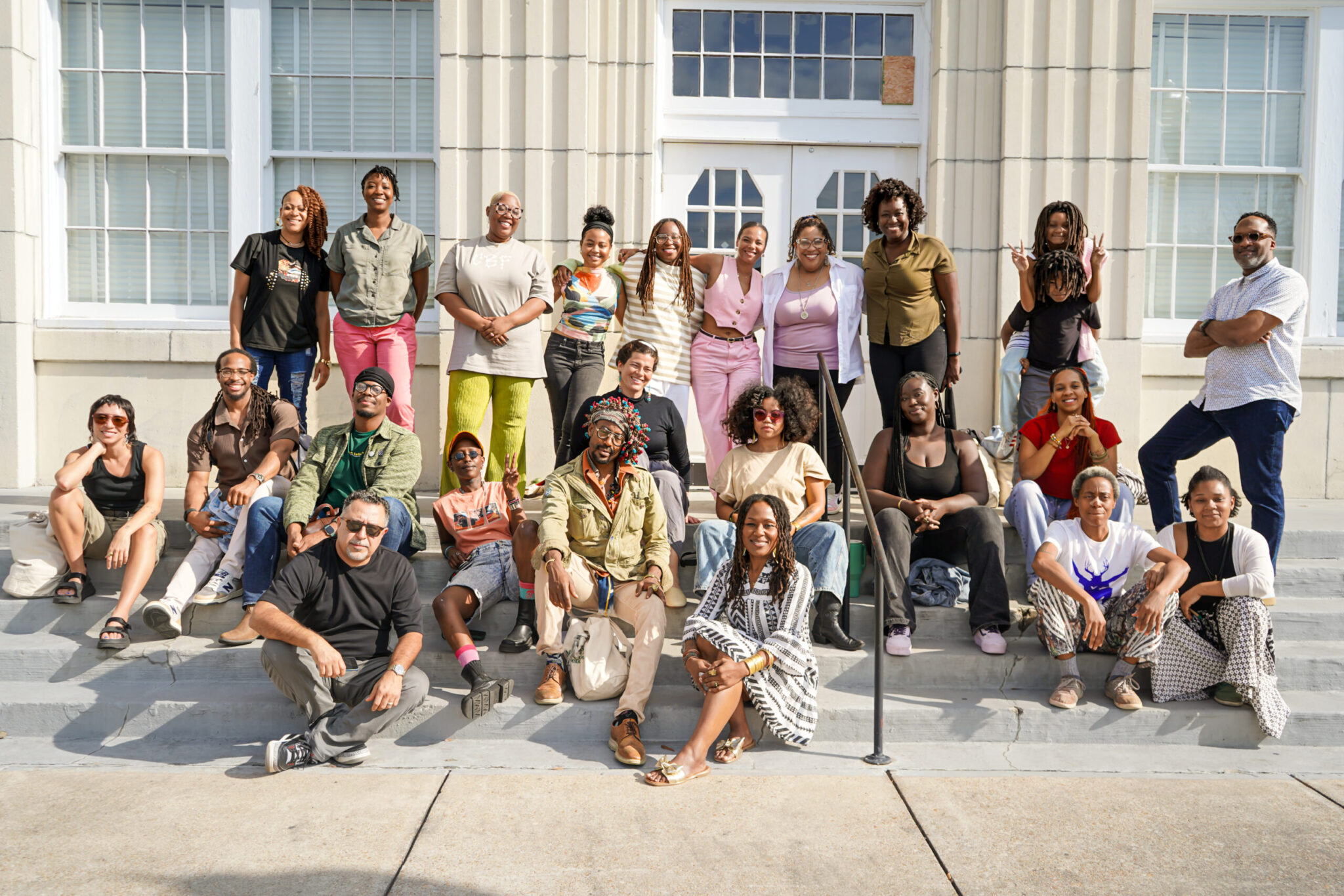
Rural Routes has helped Kumi think differently about what it means to create. Before the program, she said, she understood herself as an artist creating work in her community. Sipp Culture gave her tools to distinguish that from creating work designed with a community.
Her ongoing project, The Spirit in Our Roots, documents land and food justice work in Mississippi and Louisiana. Kumi is developing a deeper community-engaged process around the project, with its first public activation planned for September in Jackson.
She is also helping build the Ensemble Guild, an effort to strengthen Mississippi’s creative ecosystem and make it more viable for artists to live and work in the state, an approach she said has been deeply influenced by Sipp Culture. This flow of knowledge between rural communities is precisely the point.
“Our focus on cities narrows our vision of what culture is,” says Robert Smith III, senior program officer for Thriving Cultures at the Surdna Foundation, which has awarded Sipp Culture $3.33 million since 2018.
Smith says art institutions often measure success through visibility in places like New York and Los Angeles, even as rural artists build cultural life outside those creative hubs. “I can’t tell Mississippians what they need from my office on Madison Avenue,” Smith says.
Rural Routes is still young, and Smith said it is too soon for Surdna to point to broad outcomes across participating communities. Kumi’s experience offers an early glimpse of what the model is trying to make possible — artists building nationally relevant work without treating departure from rural communities as a prerequisite for success.
Sipp Culture is already planning its next physical investment. It acquired Utica’s 1878 Woodworkers of the World (WOW) building on Depot Street, which Turner said will eventually house Rural Routes and the organization’s administrative offices. Both Turners described the work in generational and sustainable terms. Brandi Turner noted that Utica did not lose its infrastructure overnight. Rebuilding it will also take time. For Carlton Turner, success does not mean convincing every young person to stay.
People may want to leave, he said. What he wants to change is the notion that progress requires it. He hopes that residents can look at Utica and know: “There’s something here for you.”