

Margins to Mainstream: The Narrative That Builds a Better Economy for All
Launched by a participatory grantmaking process, a new project is marshaling the movement’s collective knowledge about economic solutions.
For Surdna’s 2025–2026 Living in the Future Impact Report, we partnered with Next City, whose journalists covered the work of eight of our many extraordinary grantee partners and investees. Chosen from hundreds of impactful efforts this year, these stories show that despite the recent backlash against racial progress, our partners are not waiting for a just and sustainable future; they’re building it now.
Margins to Mainstream: The Narrative That Builds a Better Economy for All
By: Angely Mercado | Next City
Rakiba Kibria loves when people make connections, especially because so many allies are necessary to achieve change on a scale as large as the systems that need fixing.
Kibria was previously at Common Future, an economic justice organization, where she took part in a participatory grantmaking process. A group of grantees spent eight months determining how best to invest $500,000 from the Surdna Foundation. Kibria says they were given “the expansiveness to experiment” and were told, “This is yours. Y’all got to figure out what you want to do with it.”
Grantees came from a wide range of economic justice efforts, including raising the minimum wage and expanding benefits, community ownership of businesses and redirecting capital to the most vulnerable communities, advancing racial equity in policymaking, and much more. With a disparate yet interconnected to-do list, grantees kept saying they wished the general public understood their work and its potential to create a truly inclusive economy.
“These are fringe topics for the mainstream public,” says Kibria. “So we thought, ‘How do we bring that from the margins to the mainstream?”
The grantees landed on the idea of developing tools that would unite them — and their agenda — under a narrative everyone can support.
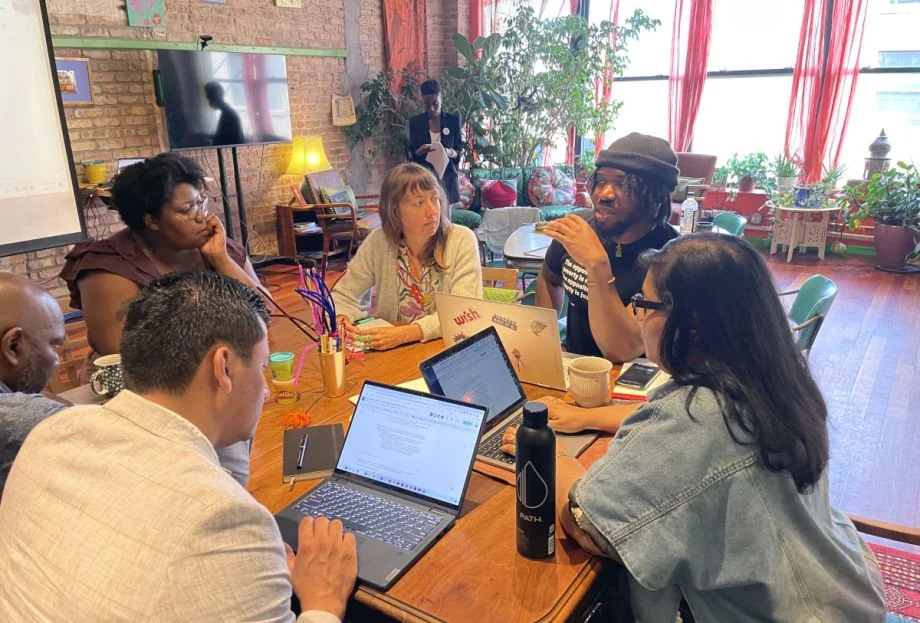
From that initial learning cohort, a smaller Stewardship Council was charged with carrying forward its ideas. It included leaders from Next City, Partnership for Southern Equity, Common Future, and Mechanism — formerly known as the Urban Manufacturing Alliance. They drafted a request for proposals through a collaborative process made possible by the support and insight of the Center for Cultural Innovation. On the road to creating a participatory grant process, CCI had already helped shape the brainstorming sessions, then it backed up the Stewardship Council, advising on the memorandum of understanding and other partnership documents they would need for grantmaking. “We talked a lot and spent a lot of time coaching about the kinds of questions that you would want to ask in a grant-making situation,” says Cate Fox, Senior Director of AmbitioUS, a national fund at CCI.
To champion the push for better communication around economic movements, the council ultimately selected a coalition of three organizations as the grantee: Beloved Economies, BLIS Collective, and Imperative 21. The trio set out to understand what’s working across the field and interviewed more than 70 economic justice leaders, compiling their feedback in May into a set of communication recommendations under the “Margins to Mainstream” banner.
Their report examined the narrative these groups were weaving as they combated economic inequality, the impact of messaging on different audiences, and how amplifying it could inspire more action.
Trevor Smith, co-founder and executive director of the BLIS Collective, says many of the interviewees exemplified how having an approachable message supports both action and policy. Even more so, a shared economic vision leads to support across the movement, and he sees their research as “thinking about how we align all the different narratives that sit within the ecosystem to make a coherent shared vision that people can align around, so that we can build a populist movement around these ideas.”
Meanwhile, the report counted 47 different ways that interviewees described the economy they are working toward. They agreed on values, though, with nearly half citing the most important narrative shift as moving from individuality toward collective care.
“The Margins to Mainstream project lifts up shared vision, values, and language; providing narrative framing and tools proven to resonate with communities across the country,” says Danielle LeBlanc, program officer for the Inclusive Economies program at the Surdna Foundation. She notes that shared framing magnifies the impact of organizations’ narrative-change efforts, building momentum for economic justice work.
Along with the report, Beloved Economies launched a website introducing its plan to build shared narrative infrastructure. It calls out a big part of the problem organizations face: “We are being outspent by those promoting narratives aimed to actually disconnect communities and workers from the wealth they generate.”
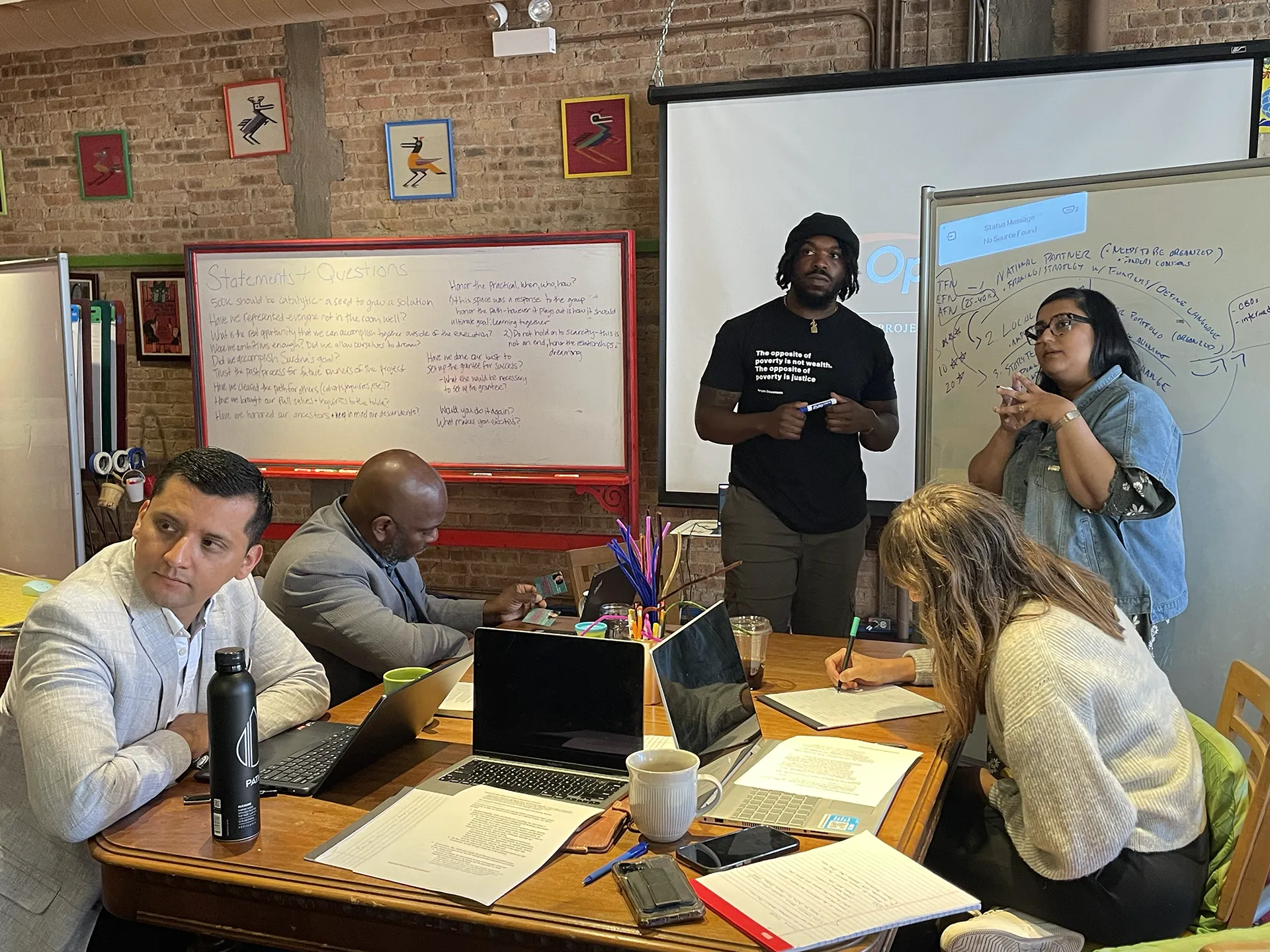
They’re planning to counter them organically by reaching more people through social media and educational content creators. State-level cohorts will work together on communicating the narrative. And Kibria says she’s especially excited to see what comes of it and how creators will improve the effectiveness of campaigns advocating for economic solutions.
“I’m excited when this moves out of the ecosystem and into more of those mainstream building strategies—whether it’s through content creators, whether it’s through kitchen table discussions,” she says. “Our people need to hear it on the ground as much as the funders who have billions of dollars in their coffers.”
The timing couldn’t be more crucial, says LeBlanc. As the U.S. faces a cost-of-living crisis and political upheaval, she underscores the importance of supporting organizations that reshape the narrative. Fox says today’s challenges have sparked interest in creative work that isn’t always top of mind, with mutual aid groups, funds, and nonprofits leading the way. She hopes the narrative tools being developed by the Margins to Mainstream project create new visibility.
“There’s a general consensus that the economic system works for very few people at the expense of a great many people,” says Fox. “As people question institutions of all sorts, people are turning toward each other and asking each other to trust, to build trust, and to build a different set of systems [that] could work for them.”